


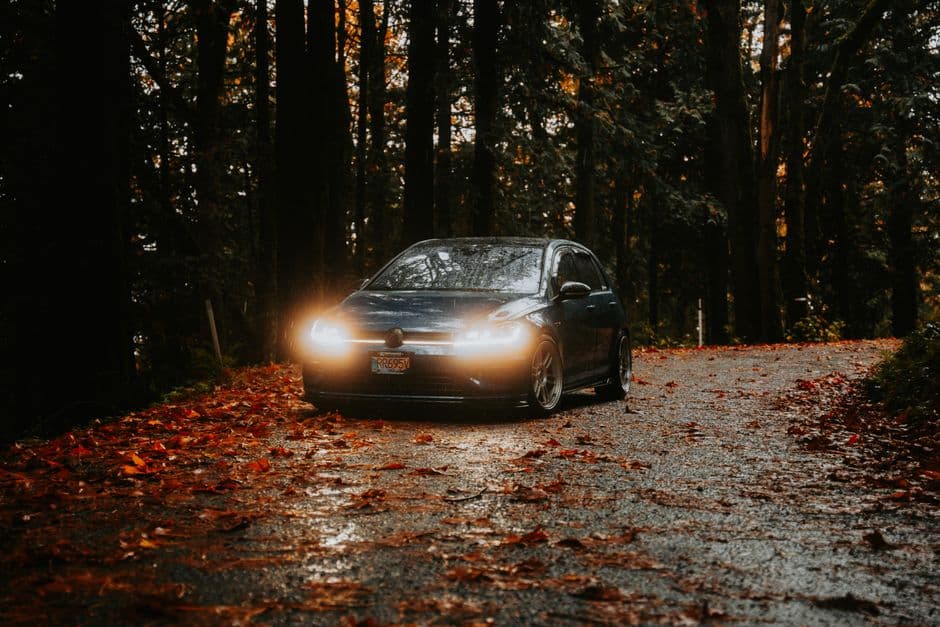
Why are my headlights dim?
If you are asking “why are my headlights dim,” the answer is not automatically “battery” or “alternator.” Dim headlights can be caused by a simple visibility issue, normal light wear, headlight aim, or an electrical problem that needs testing.
Start by separating what you are seeing:
The Car Care Council treats vehicle lights as normal wear items that should be inspected periodically and replaced when needed, and it also notes that dirt and debris can make working lights look dim (Car Care Council). That is why the first step is not guessing at parts. It is figuring out whether the problem is light output, beam placement, or the electrical system feeding the lamps.
Start by separating what you are seeing:
- The light looks weak because the lens is dirty or hazy.
- One side is dimmer than the other.
- The beam points too low, too high, or off to one side.
- The lights flicker, pulse, or change brightness with other electrical loads.
- A warning light appears, or other electrical items act up.
The Car Care Council treats vehicle lights as normal wear items that should be inspected periodically and replaced when needed, and it also notes that dirt and debris can make working lights look dim (Car Care Council). That is why the first step is not guessing at parts. It is figuring out whether the problem is light output, beam placement, or the electrical system feeding the lamps.
Why dim headlights get more noticeable in fall
Around mid-September, evening drives start to feel different in Central PA. A commute or errand near Grantville, Hershey, I-81, I-78, or the PA Turnpike may happen closer to dusk than it did a few weeks earlier. Add fall fog, wet leaves, darker rural shoulders, and the approach of winter visibility season, and weak headlights become more than an annoyance.
A practical way to judge the situation is this: can you comfortably see far enough ahead to stop within the area your headlights illuminate? The Car Care Council advises drivers not to drive faster than the distance illuminated by their headlights (Car Care Council). If the lit area ahead is too short, slow down and avoid forcing a dark drive until the lighting concern is checked.
A practical way to judge the situation is this: can you comfortably see far enough ahead to stop within the area your headlights illuminate? The Car Care Council advises drivers not to drive faster than the distance illuminated by their headlights (Car Care Council). If the lit area ahead is too short, slow down and avoid forcing a dark drive until the lighting concern is checked.
Three look-alike problems: dirty lenses, worn lights, and poor aim
Dim headlights often get lumped together, but three different issues can feel similar from the driver’s seat.
Dirty or coated lenses can scatter light before it reaches the road. Cleaning the outside of the headlight lenses is a reasonable first check because exterior debris can make working lights look weaker (Car Care Council).
Normal light wear is another possibility. Lights do not last forever, and the Car Care Council includes them with wear items that need periodic inspection and replacement when needed (Car Care Council). One lamp that is noticeably weaker than the other may be a clue, but it still needs the right inspection rather than a guess.
Headlight aim is its own issue. A lamp can produce light and still fail to put that light where you need it. Mis-aimed headlights can reduce your view of the road and can also bother other drivers with glare (Car Care Council). If the road looks dark even though the lights are on, or the beam pattern looks uneven, aim should be considered.
Dirty or coated lenses can scatter light before it reaches the road. Cleaning the outside of the headlight lenses is a reasonable first check because exterior debris can make working lights look weaker (Car Care Council).
Normal light wear is another possibility. Lights do not last forever, and the Car Care Council includes them with wear items that need periodic inspection and replacement when needed (Car Care Council). One lamp that is noticeably weaker than the other may be a clue, but it still needs the right inspection rather than a guess.
Headlight aim is its own issue. A lamp can produce light and still fail to put that light where you need it. Mis-aimed headlights can reduce your view of the road and can also bother other drivers with glare (Car Care Council). If the road looks dark even though the lights are on, or the beam pattern looks uneven, aim should be considered.
When it starts to look electrical
Electrical problems usually show up as behavior, not just appearance. Dim headlights that flicker, work only sometimes, brighten when the engine speed changes, or change when the heater fan, rear defroster, or other electrical loads are on deserve proper testing.
That is where battery alternator guessing can waste time. A weak battery, charging system concern, wiring problem, ground issue, lamp connector problem, or control-module concern can look similar from the driver’s seat. Replacing parts without testing may miss the actual cause.
NextGen AutoWorks offers battery testing, charging system testing, alternator diagnostics, wiring repair, lighting diagnostics, power accessory diagnostics, advanced diagnostics, and module communication testing. The goal is to test the system and explain what is actually happening before recommending a repair.
That is where battery alternator guessing can waste time. A weak battery, charging system concern, wiring problem, ground issue, lamp connector problem, or control-module concern can look similar from the driver’s seat. Replacing parts without testing may miss the actual cause.
NextGen AutoWorks offers battery testing, charging system testing, alternator diagnostics, wiring repair, lighting diagnostics, power accessory diagnostics, advanced diagnostics, and module communication testing. The goal is to test the system and explain what is actually happening before recommending a repair.
When to stop driving or get help
Dim headlights are a visibility problem first. If you cannot see far enough to stop within the headlight beam, slow down and avoid continuing a dark drive if you have a safer option.
Stop when safe and seek help if you notice:
Do not pull apart wiring or try electrical repairs on the roadside. Electrical safety concerns should be inspected professionally, especially when the symptoms affect lighting during night driving.
Stop when safe and seek help if you notice:
- An electrical burning smell
- Smoke or fire
- Lights cutting out while driving
- Multiple electrical systems acting up at once
- The vehicle feels unsafe to control
Do not pull apart wiring or try electrical repairs on the roadside. Electrical safety concerns should be inspected professionally, especially when the symptoms affect lighting during night driving.
A note for Pennsylvania inspection timing
If your inspection date is coming up, do not ignore lighting concerns. Lights can be part of inspection-related issues, but Pennsylvania inspection outcome can only be determined by an actual inspection at an official inspection station.
A good plan is to handle dim headlights before the weather and darker evenings make the problem more stressful. Lighting concerns may fit with routine maintenance, electrical diagnostics, or advanced diagnostics, depending on what the inspection finds.
A good plan is to handle dim headlights before the weather and darker evenings make the problem more stressful. Lighting concerns may fit with routine maintenance, electrical diagnostics, or advanced diagnostics, depending on what the inspection finds.
Frequently Asked Questions
Do dim headlights always mean my alternator is going bad?
No. Dim headlights can come from dirty lenses, normal light wear, aim problems, wiring concerns, battery condition, or charging system trouble. The battery and alternator should be tested before assuming either one is the cause.
Can I drive at night with dim headlights?
Use your visibility as the limit. If you cannot see far enough to stop within the area your headlights illuminate, slow down and avoid continuing the drive in the dark if there is a safer option.
Should I clean the headlights before scheduling diagnostics?
Cleaning the outside of the lenses is a reasonable first check because dirt and debris can make working lights look weak. If the lights are still dim, uneven, flickering, or unreliable afterward, the vehicle needs a lighting or electrical inspection.
Can dim headlights affect PA inspection?
Lighting concerns can matter during inspection, but the result can only be determined by an actual inspection at an official inspection station. If a light is dim, out, mis-aimed, or unreliable, it is worth addressing before inspection time.
If your headlights look dim, uneven, or unreliable before more fall and winter night driving, call NextGen AutoWorks in Grantville at (717) 473-5997 to schedule service.
dim headlightselectrical diagnosticsbattery alternatorroutine maintenanceGrantville PA