


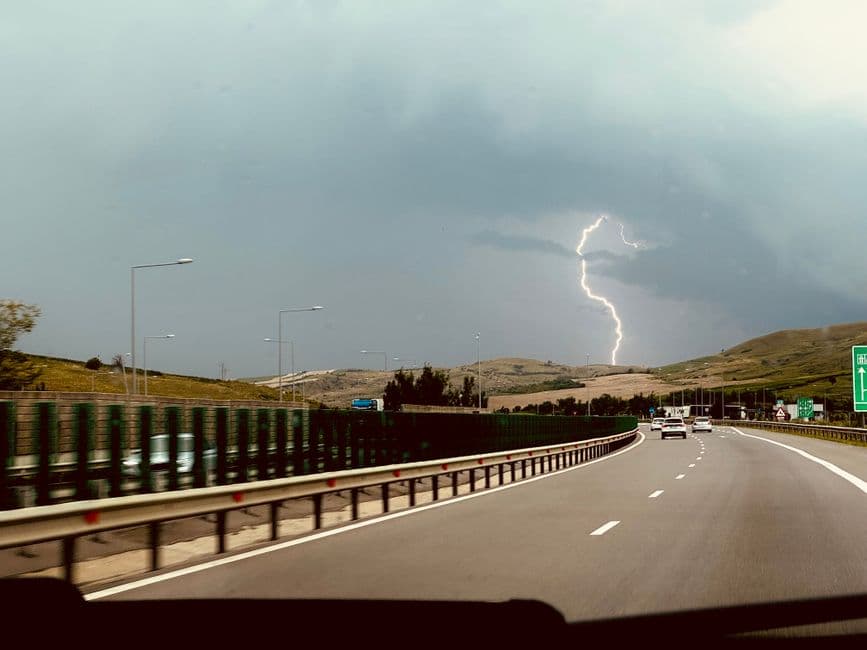
Should I keep driving during a thunderstorm?
The honest answer is: it depends on what the storm is doing right now. Light rain on a familiar road is different from heavy rain with poor visibility, water crossing the road, lightning at a campground, or a storm cell sitting over I-81, I-78, the PA Turnpike, Hershey, or Grantville.
Think of thunderstorm driving as a decision tree:
Visibility safety matters, but floodwater and lightning are the big line-drawers. Those are not situations where better tires, brighter lights, or confidence behind the wheel make the hazard go away.
Think of thunderstorm driving as a decision tree:
- If you can see clearly, the road is not flooding, and the vehicle feels normal, continue only if conditions remain manageable.
- If visibility drops, traffic gets unpredictable, or the vehicle starts pulling, shaking, warning, or braking poorly, get to a safe place instead of pushing on.
- If water is over the road or barricades are up, do not continue that route.
- If you are outside the vehicle and thunder is nearby, get inside a safe building or a hard-topped metal vehicle with the windows closed.
Visibility safety matters, but floodwater and lightning are the big line-drawers. Those are not situations where better tires, brighter lights, or confidence behind the wheel make the hazard go away.
Water over the road is not ordinary heavy rain
A wet road still looks like a road. A flooded road may hide what is left of the road. The National Weather Service says not to drive into flooded roadways or around barricades because the road surface can be washed out or hidden, and the water can conceal debris, electrical wires, chemicals, and other hazards (National Weather Service).
The part drivers underestimate is how little water it can take. The National Weather Service gives this flood-force context: 6 inches of moving water can knock a person down, 12 inches can float a car or small SUV, and 18 inches can carry away larger vehicles (National Weather Service). That is why judging depth from the driver’s seat is not a good plan.
If moving water traps you, the guidance is to move to the highest possible point and call 911 if possible (National Weather Service). Do not wait in a low spot while water rises.
The part drivers underestimate is how little water it can take. The National Weather Service gives this flood-force context: 6 inches of moving water can knock a person down, 12 inches can float a car or small SUV, and 18 inches can carry away larger vehicles (National Weather Service). That is why judging depth from the driver’s seat is not a good plan.
If moving water traps you, the guidance is to move to the highest possible point and call 911 if possible (National Weather Service). Do not wait in a low spot while water rises.
Lightning: the roof and windows matter
A hard-topped metal vehicle with its windows closed can provide lightning protection because of its outer metal shell. Merely being covered is not the same thing: do not treat a soft-top convertible, tent, picnic shelter, or motorcycle as equivalent shelter (National Weather Service).
If a storm rolls in while you are parked at an outdoor event or campground, move into a safe building or suitable vehicle. Wait 30 minutes after the last thunder before going back outside (National Weather Service).
If a storm rolls in while you are parked at an outdoor event or campground, move into a safe building or suitable vehicle. Wait 30 minutes after the last thunder before going back outside (National Weather Service).
Motorcycles, bicycles, and open vehicles need a different plan
A motorcycle or bicycle does not give the same lightning shelter as a hard-topped metal vehicle with the windows closed. If threatening skies appear while riding, National Weather Service guidance is to stop at a safe building and wait 30 minutes after the last thunder before riding again (National Weather Service).
That also matters for summer campground runs, trail rides, and short trips that seem easy to squeeze in before a storm. If the sky is already turning and thunder is close, plan around shelter first. Do not count on a bike, motorcycle, tent, or open shelter to protect you from lightning.
That also matters for summer campground runs, trail rides, and short trips that seem easy to squeeze in before a storm. If the sky is already turning and thunder is close, plan around shelter first. Do not count on a bike, motorcycle, tent, or open shelter to protect you from lightning.
Check weather before the storm is overhead
Thunderstorms move fast in Central PA, and flood conditions can change quickly. The National Weather Service recommends monitoring local radio, TV, NOAA Weather Radio, internet, or social channels during flood threats (National Weather Service). For lightning, it also recommends planning ahead by watching forecasts through sources such as NOAA Weather Radio, internet, smartphone, radio, or TV and moving to safety before the storm is directly overhead (National Weather Service).
That is useful before a drive to Hershey, a commute through Grantville, or a longer run on I-81, I-78, or the PA Turnpike. If the route ahead shows flooding, severe lightning, or repeated warnings, turning around or waiting it out is often the better decision than trying to beat the storm.
That is useful before a drive to Hershey, a commute through Grantville, or a longer run on I-81, I-78, or the PA Turnpike. If the route ahead shows flooding, severe lightning, or repeated warnings, turning around or waiting it out is often the better decision than trying to beat the storm.
Vehicle readiness helps, but it does not overrule weather
A well-maintained vehicle can reduce avoidable problems during summer travel, but maintenance does not make floodwater safe or lightning irrelevant. Treat vehicle readiness as preparation for normal rain and changing conditions, not permission to drive through severe weather.
Before summer trips, useful checks include:
NextGen AutoWorks can help with routine maintenance, tire services, brake repair, electrical diagnostics, and PA state inspections. Pennsylvania inspection outcome can only be determined by an actual inspection at an official inspection station.
Before summer trips, useful checks include:
- Wipers that clear the glass properly
- Exterior lights that work so others can see the vehicle
- Tires with no obvious damage or severe wear concerns
- Brakes that feel normal and do not make warning noises
- Fluid checks and routine maintenance based on the vehicle’s needs
- Warning lights, steering changes, or braking concerns that should be inspected before travel
NextGen AutoWorks can help with routine maintenance, tire services, brake repair, electrical diagnostics, and PA state inspections. Pennsylvania inspection outcome can only be determined by an actual inspection at an official inspection station.
Frequently Asked Questions
Is it okay to drive through shallow-looking water during a storm?
No. You cannot reliably judge the road surface or hazards under the water from the driver’s seat. The National Weather Service says not to drive into flooded roadways or around barricades because roads can be washed out or hidden and water can conceal dangerous debris and other hazards.
Is my car a safe place during lightning?
A hard-topped metal vehicle with the windows closed can provide protection through its metal shell. A soft-top convertible or open vehicle is not equivalent shelter; tents and picnic shelters are not safe alternatives either (National Weather Service).
How long should I wait after thunder before getting back outside?
The National Weather Service says to wait 30 minutes after the last thunder before resuming outdoor activity. That applies if you are at a campground, park, outdoor event, roadside stop, or anywhere else you left the vehicle or building.
Can maintenance make heavy rain driving safe?
Maintenance can help reduce vehicle-related problems, such as poor wiper performance, lighting issues, tire concerns, brake concerns, or warning lights. It cannot make flooded roads safe, and it does not replace the need to stop, turn around, or seek shelter when storm conditions call for it.
routine maintenancetire servicesbrake repairelectrical diagnosticsPA state inspectionsschedule service
Getting ready for summer driving around Grantville, Hershey, I-81, I-78, or the PA Turnpike? Call NextGen AutoWorks at (717) 473-5997 or schedule service for routine maintenance or a pre-trip check.
thunderstorm drivingheavy rain drivingvisibility safetyCentral PA drivingroutine maintenance