


How do I prepare my car for summer heat?
Think of summer preparation as a pre-trip check, not a last-minute guess after a warning light comes on. For August driving around Grantville, Hersheypark traffic, I-81, I-78, or the PA Turnpike, the practical list is tires, coolant, battery and charging, AC, oil and other fluids, lights, wipers, floor mats, and recall awareness.
NHTSA frames summer road-trip prep as preventive maintenance before travel, including checking for open safety recalls by license plate or VIN before a trip (NHTSA). If an open recall appears, contact the automaker or a dealer for that campaign work. Local maintenance can still be handled separately so the rest of the vehicle is ready for heat, traffic, and highway miles.
NHTSA frames summer road-trip prep as preventive maintenance before travel, including checking for open safety recalls by license plate or VIN before a trip (NHTSA). If an open recall appears, contact the automaker or a dealer for that campaign work. Local maintenance can still be handled separately so the rest of the vehicle is ready for heat, traffic, and highway miles.
Tires: pressure, condition, spare, and heat
Tire pressure summer checks should start with the correct number for your vehicle. Use the tire pressure listed on the driver-door placard or owner’s manual, not the maximum pressure printed on the tire sidewall. NHTSA recommends checking pressure when tires are cold, at least three hours after driving, and including the spare (NHTSA).
A tire check is not only air pressure. Look over the tread and sidewalls before a long drive. NHTSA says to inspect for cuts, punctures, bulges, cracks, scrapes, bumps, uneven wear, and low tread; damaged tires should be taken to a tire professional (NHTSA TireWise).
Hot pavement and long-distance driving add another reason to care. NHTSA explains that sustained high temperature can contribute to tire deterioration and may lead to blowouts or tread separation (NHTSA TireWise). TPMS helps, but it is not a replacement for regular gauge checks; on covered newer vehicles, the light generally means a tire is already significantly low.
A tire check is not only air pressure. Look over the tread and sidewalls before a long drive. NHTSA says to inspect for cuts, punctures, bulges, cracks, scrapes, bumps, uneven wear, and low tread; damaged tires should be taken to a tire professional (NHTSA TireWise).
Hot pavement and long-distance driving add another reason to care. NHTSA explains that sustained high temperature can contribute to tire deterioration and may lead to blowouts or tread separation (NHTSA TireWise). TPMS helps, but it is not a replacement for regular gauge checks; on covered newer vehicles, the light generally means a tire is already significantly low.
Coolant and fluids: do not wait for the gauge to climb
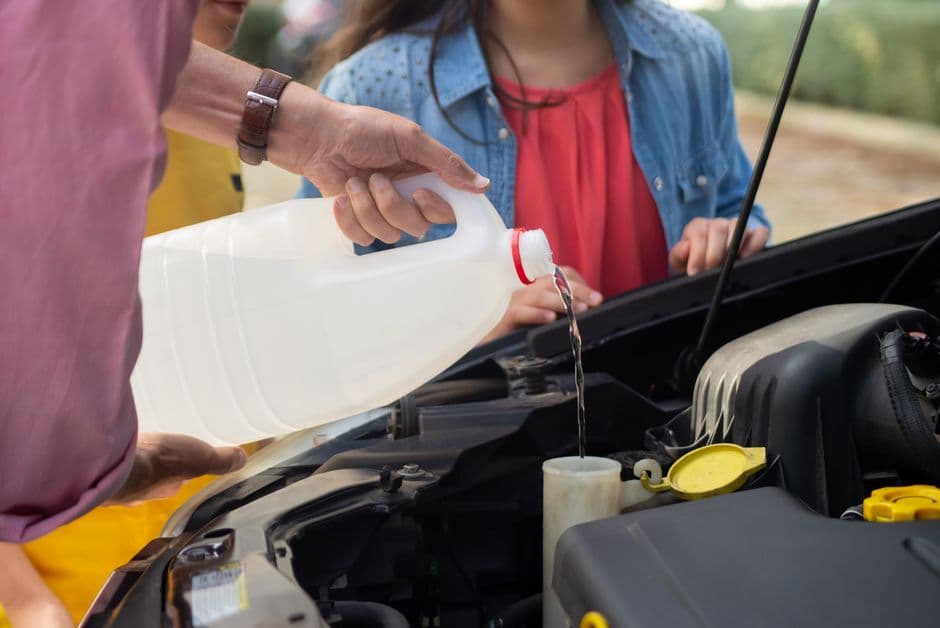
Summer maintenance should include the cooling system before the temperature gauge gives you a reason to worry. NHTSA says coolant should be adequate and meet the manufacturer’s specifications, with the owner’s manual controlling the recommendation. It also points to checking for leaks, testing coolant, and draining or replacing old coolant as needed (NHTSA).
That does not mean every vehicle needs the same coolant service at the same mileage. It means the fluid level, condition, and leaks need to be evaluated based on the vehicle.
Oil and other fluids belong in the same conversation. Low or neglected fluids can turn a hot drive into a problem faster, especially in stop-and-go traffic. A routine maintenance visit can group fluid checks with filters, oil service needs, and a basic lookover.
If the vehicle overheats, do not keep pushing it down the road. Stop when safe, shut it down, and arrange help instead of trying to drive through the problem.
That does not mean every vehicle needs the same coolant service at the same mileage. It means the fluid level, condition, and leaks need to be evaluated based on the vehicle.
Oil and other fluids belong in the same conversation. Low or neglected fluids can turn a hot drive into a problem faster, especially in stop-and-go traffic. A routine maintenance visit can group fluid checks with filters, oil service needs, and a basic lookover.
If the vehicle overheats, do not keep pushing it down the road. Stop when safe, shut it down, and arrange help instead of trying to drive through the problem.
Battery and charging: summer can start the winter failure
A slow crank in heat is not automatically a bad battery, and a battery that starts today may still be getting stressed. The Car Care Council says summer heat can shorten battery life, and battery trouble that shows up in winter may begin during hot weather (Car Care Council).
Heat and charging problems both matter. The same source identifies excessive heat and overcharging as battery-life concerns; heat can evaporate fluid in serviceable batteries and damage internal structure, while a charging-system fault can overcharge and slowly ruin a battery (Car Care Council).
Warning signs worth checking include:
Depending on the symptom, the right path may include battery testing, charging system testing, alternator diagnostics, starter diagnostics, wiring checks, or electrical diagnostics. Replacing a battery without testing can miss the part that caused the battery to struggle.
Heat and charging problems both matter. The same source identifies excessive heat and overcharging as battery-life concerns; heat can evaporate fluid in serviceable batteries and damage internal structure, while a charging-system fault can overcharge and slowly ruin a battery (Car Care Council).
Warning signs worth checking include:
- Dim headlights or interior lights
- Accessories that do not operate normally
- Battery or check-engine light
- Slow cranking or repeated jump-starts
Depending on the symptom, the right path may include battery testing, charging system testing, alternator diagnostics, starter diagnostics, wiring checks, or electrical diagnostics. Replacing a battery without testing can miss the part that caused the battery to struggle.
AC, cabin safety, and Hersheypark traffic comfort
Weak AC becomes obvious when traffic slows down on a humid afternoon, but warm air from the vents does not prove the system only needs refrigerant. AC service depends on the vehicle, refrigerant type, leaks, pressures, fan operation, and climate controls.
Professional heating and cooling service may involve AC diagnostics, leak detection, AC recharge, R-134a or R-1234yf service, cooling system service, or climate control diagnostics. Refrigerant and AC pressure work should be handled professionally.
Cabin heat also has a people-safety side. NHTSA says children should never be left alone in vehicles because interior temperature can become deadly quickly, even when the outside temperature seems mild (NHTSA). That warning applies at quick stops, parking lots, and travel breaks, not only during extreme heat.
Professional heating and cooling service may involve AC diagnostics, leak detection, AC recharge, R-134a or R-1234yf service, cooling system service, or climate control diagnostics. Refrigerant and AC pressure work should be handled professionally.
Cabin heat also has a people-safety side. NHTSA says children should never be left alone in vehicles because interior temperature can become deadly quickly, even when the outside temperature seems mild (NHTSA). That warning applies at quick stops, parking lots, and travel breaks, not only during extreme heat.
Small items that matter on a summer trip
The small checklist items are easy to skip until the weather changes. NHTSA includes lights, wiper blades, properly fitted floor mats, oil, other fluids, the battery, and charging system in summer travel preparation (NHTSA).
For Central PA driving, that matters because a sunny afternoon can turn into glare, heavy rain, and wet roads quickly. Before a longer drive, check:
NextGen AutoWorks in Grantville can help with routine maintenance, tire service, heating and cooling checks, battery and charging tests, and diagnostics before late-summer travel. The goal is simple: find obvious heat-related concerns before your next drive turns into a roadside problem.
For Central PA driving, that matters because a sunny afternoon can turn into glare, heavy rain, and wet roads quickly. Before a longer drive, check:
- Headlights, brake lights, and turn signals
- Wiper blade condition and washer fluid
- Air and cabin filters if airflow or visibility is poor
- Floor mats that sit flat and do not interfere with pedals
- Any warning lights already on the dash
NextGen AutoWorks in Grantville can help with routine maintenance, tire service, heating and cooling checks, battery and charging tests, and diagnostics before late-summer travel. The goal is simple: find obvious heat-related concerns before your next drive turns into a roadside problem.
Frequently Asked Questions
Should I check tire pressure before or after driving?
Check tire pressure when the tires are cold, at least three hours after driving. Use the pressure on the vehicle placard or owner’s manual, and include the spare, as NHTSA recommends.
Does weak AC mean my car only needs a recharge?
No. Warm vents can come from low refrigerant, a leak, an electrical or control issue, or another AC system problem. AC pressure and refrigerant service should be tested and handled professionally.
Should I check recalls before a summer road trip?
Yes. NHTSA recommends checking for open safety recalls by license plate or VIN before travel. If one appears, contact the automaker or dealer for that campaign, then keep up with normal maintenance separately.
When should I stop driving in summer heat?
Stop when safe and seek help if the vehicle overheats, loses steering control, develops severe vibration, shows smoke, smells like fuel, or has an electrical burning odor. Those are not wait-and-see conditions.
routine maintenancetire servicesheating and cooling serviceelectrical diagnosticsadvanced diagnosticsschedule service
If you’re preparing for August heat, Hersheypark traffic, or a Central PA road trip, call NextGen AutoWorks at (717) 473-5997 to schedule service.
summer maintenancetiresAC servicebattery testingcooling systemGrantville PA