


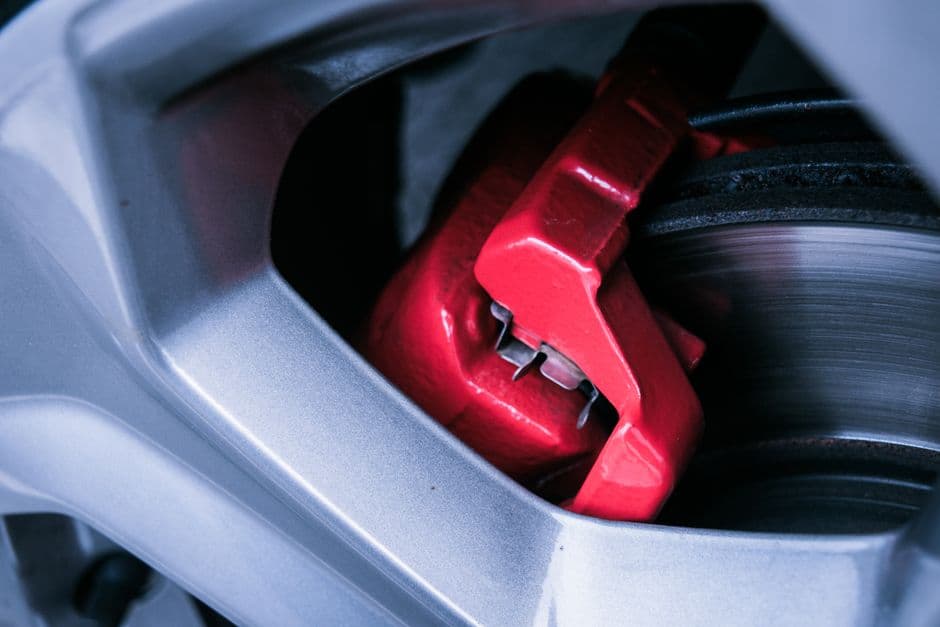
How does towing affect my brakes?
Towing changes the job your brakes are doing. Instead of slowing only the truck, SUV, van, or motorhome, the braking system has to deal with the tow vehicle plus whatever is behind it: camper, boat, utility trailer, concession trailer, or car hauler.
A vehicle-specific towing manual in an NHTSA file explains the key idea clearly: the tow vehicle’s brakes are rated around the vehicle’s own gross vehicle weight rating, not necessarily the higher combined weight of vehicle plus trailer. When the combined load is beyond what the tow vehicle brakes are designed to handle by themselves, functioning trailer brakes become part of the control system (NHTSA-hosted manual material).
That is why how towing affects brakes is not just a pad-wear question. Before a loaded trip, verify your owner’s manual, tow rating, payload, hitch rating, tongue weight, tire pressure information, and trailer brake requirements using manufacturer information and current official sources.
A vehicle-specific towing manual in an NHTSA file explains the key idea clearly: the tow vehicle’s brakes are rated around the vehicle’s own gross vehicle weight rating, not necessarily the higher combined weight of vehicle plus trailer. When the combined load is beyond what the tow vehicle brakes are designed to handle by themselves, functioning trailer brakes become part of the control system (NHTSA-hosted manual material).
That is why how towing affects brakes is not just a pad-wear question. Before a loaded trip, verify your owner’s manual, tow rating, payload, hitch rating, tongue weight, tire pressure information, and trailer brake requirements using manufacturer information and current official sources.
What changes when you are driving with a trailer
With a trailer attached, your stopping plan needs to start earlier. The same NHTSA-hosted manual material advises allowing more stopping distance, anticipating stops, and braking gradually while towing. It also advises using a lower gear on long or steep descents instead of holding the brake pedal continuously, because constant braking can overheat the brakes and reduce braking effectiveness (NHTSA-hosted manual material).
Tow/Haul or Grade Assist, if your vehicle has it, can help by adding engine braking and reducing excessive shifting while towing. That feature is vehicle-dependent. It does not replace good brake pads, rotors or drums, brake fluid condition, caliper operation, ABS function, or working trailer brakes.
In plain English: more weight means more planning. Leave room, slow down before the hill or turn, and do not wait until the last moment to ask the brakes for everything.
Tow/Haul or Grade Assist, if your vehicle has it, can help by adding engine braking and reducing excessive shifting while towing. That feature is vehicle-dependent. It does not replace good brake pads, rotors or drums, brake fluid condition, caliper operation, ABS function, or working trailer brakes.
In plain English: more weight means more planning. Leave room, slow down before the hill or turn, and do not wait until the last moment to ask the brakes for everything.
Trailer brakes are part of the brake system you are relying on
A towing brake check should include the trailer, not just the tow vehicle. Trailer brakes may be electric, manual, automatic, surge, or inertia-type depending on the setup. The NHTSA-hosted manual material supports the point that trailer brakes need to be installed and adjusted to the manufacturer’s specifications and used within applicable requirements (NHTSA-hosted manual material).
NHTSA material discussing trailer brake controls also supports the idea that trailer brakes and tow vehicle brakes need to work together in a balanced way, but it does not give one setup procedure that fits every controller, trailer, and vehicle (NHTSA interpretation).
Useful pre-trip questions include:
Do not try to adjust brake hydraulics, controller wiring, or hitch equipment by guesswork. Those are safety-related systems.
NHTSA material discussing trailer brake controls also supports the idea that trailer brakes and tow vehicle brakes need to work together in a balanced way, but it does not give one setup procedure that fits every controller, trailer, and vehicle (NHTSA interpretation).
Useful pre-trip questions include:
- Does the trailer brake controller power up and respond as expected?
- Does the trailer connector fit securely with no obvious damage?
- Does the trailer brake type match the trailer and tow vehicle setup?
- Is the breakaway system present where required and maintained according to its instructions?
- Has the tow vehicle brake system been inspected before the loaded trip?
Do not try to adjust brake hydraulics, controller wiring, or hitch equipment by guesswork. Those are safety-related systems.
Pennsylvania trailer brake basics for local towing
For Grantville-area towing on Pennsylvania highways, trailer equipment rules may matter before you ever get to the campground, job site, lake, or event lot.
PennDOT Publication 45 says braking systems and components for covered recreational, semi-, and utility trailers operated on highways must be in safe operating condition. When service brakes are required, they must meet the listed stopping-distance requirements (PennDOT Publication 45, Subchapter G).
The same PennDOT section allows surge or inertia-type systems, so not every compliant trailer brake setup is controlled the same way from the driver’s seat. It also says a trailer operated on a Pennsylvania highway that has brakes, or has a gross weight over 3,000 pounds, must have a breakaway system that automatically stops and holds the trailer if it separates from the tow vehicle (PennDOT Publication 45, Subchapter G).
Treat that as a reason to verify the current PennDOT requirements for your trailer, not as a shortcut around an actual inspection.
PennDOT Publication 45 says braking systems and components for covered recreational, semi-, and utility trailers operated on highways must be in safe operating condition. When service brakes are required, they must meet the listed stopping-distance requirements (PennDOT Publication 45, Subchapter G).
The same PennDOT section allows surge or inertia-type systems, so not every compliant trailer brake setup is controlled the same way from the driver’s seat. It also says a trailer operated on a Pennsylvania highway that has brakes, or has a gross weight over 3,000 pounds, must have a breakaway system that automatically stops and holds the trailer if it separates from the tow vehicle (PennDOT Publication 45, Subchapter G).
Treat that as a reason to verify the current PennDOT requirements for your trailer, not as a shortcut around an actual inspection.
When brake service before towing makes sense in Central PA
A brake inspection before towing is a practical move when the trip includes summer heat, hills, highway speed, a loaded trailer, or stop-and-go traffic near Hershey, I-81, I-78, or the PA Turnpike. The goal is to find problems before the brakes are working harder than they do in normal unloaded driving.
Have the tow vehicle and trailer checked before continuing if you notice:
NextGen AutoWorks offers brake repair, including brake inspections, pad and shoe replacement, rotor service, brake fluid service, brake line inspection, caliper service, and ABS diagnostics. The shop also offers RV repair and hitch installation, including RV maintenance, hitch installation, tow bars, brake controllers, trailer wiring, and weight distribution setup.
If braking feels unsafe during the trip, get to a safe place, stay clear of traffic, and arrange help before towing farther.
Have the tow vehicle and trailer checked before continuing if you notice:
- Brake pedal feel that changes while towing
- Pulling, grabbing, grinding, or strong vibration while braking
- A brake warning light or ABS warning light
- Smoke, a sharp hot smell, or braking that feels weaker after a grade
- Trailer pushing, jerking, or not braking in a coordinated way
- Damaged trailer wiring, loose connectors, or uncertain brake controller operation
NextGen AutoWorks offers brake repair, including brake inspections, pad and shoe replacement, rotor service, brake fluid service, brake line inspection, caliper service, and ABS diagnostics. The shop also offers RV repair and hitch installation, including RV maintenance, hitch installation, tow bars, brake controllers, trailer wiring, and weight distribution setup.
If braking feels unsafe during the trip, get to a safe place, stay clear of traffic, and arrange help before towing farther.
Frequently Asked Questions
Does towing make brake pads wear faster?
It can. Towing adds combined weight and heat, so the brakes may work harder than they do in normal unloaded driving. Actual towing brake wear depends on the vehicle, trailer, load, route, driving habits, brake condition, and whether the trailer brakes are doing their share.
Do I need trailer brakes if my truck has good brakes?
Do not assume the tow vehicle brakes are enough by themselves. Vehicle guidance in the linked vehicle-specific manual explains that tow vehicle brakes are rated around the vehicle’s own gross vehicle weight rating, not necessarily the full vehicle-plus-trailer combination. Pennsylvania requirements can also apply based on the trailer, so verify your owner’s manual and current official rules.
Can Tow/Haul mode or Grade Assist protect my brakes?
Those features can help when equipped by adding engine braking and reducing unnecessary shifting, but they are not a replacement for properly functioning tow vehicle brakes and trailer brakes. Use the feature according to your owner’s manual and still have brake concerns inspected.
What should I check before towing in Pennsylvania?
Verify towing capacity, payload, hitch rating, tongue weight, tire pressure, and trailer brake requirements from the owner’s manual, trailer documentation, and current official sources. Use the tire pressure information from the vehicle placard, owner’s manual, or trailer manufacturer information rather than guessing from the tire sidewall. For inspection questions, the result can only be determined at an official inspection station.
Towing soon from Grantville, Hershey, or the I-81 corridor? Call NextGen AutoWorks at (717) 473-5997 to schedule brake service or a towing setup check before the trip.
towingbrakesRV repairtrailer maintenanceGrantville PA