


Two cam lobes on the way to Geneva
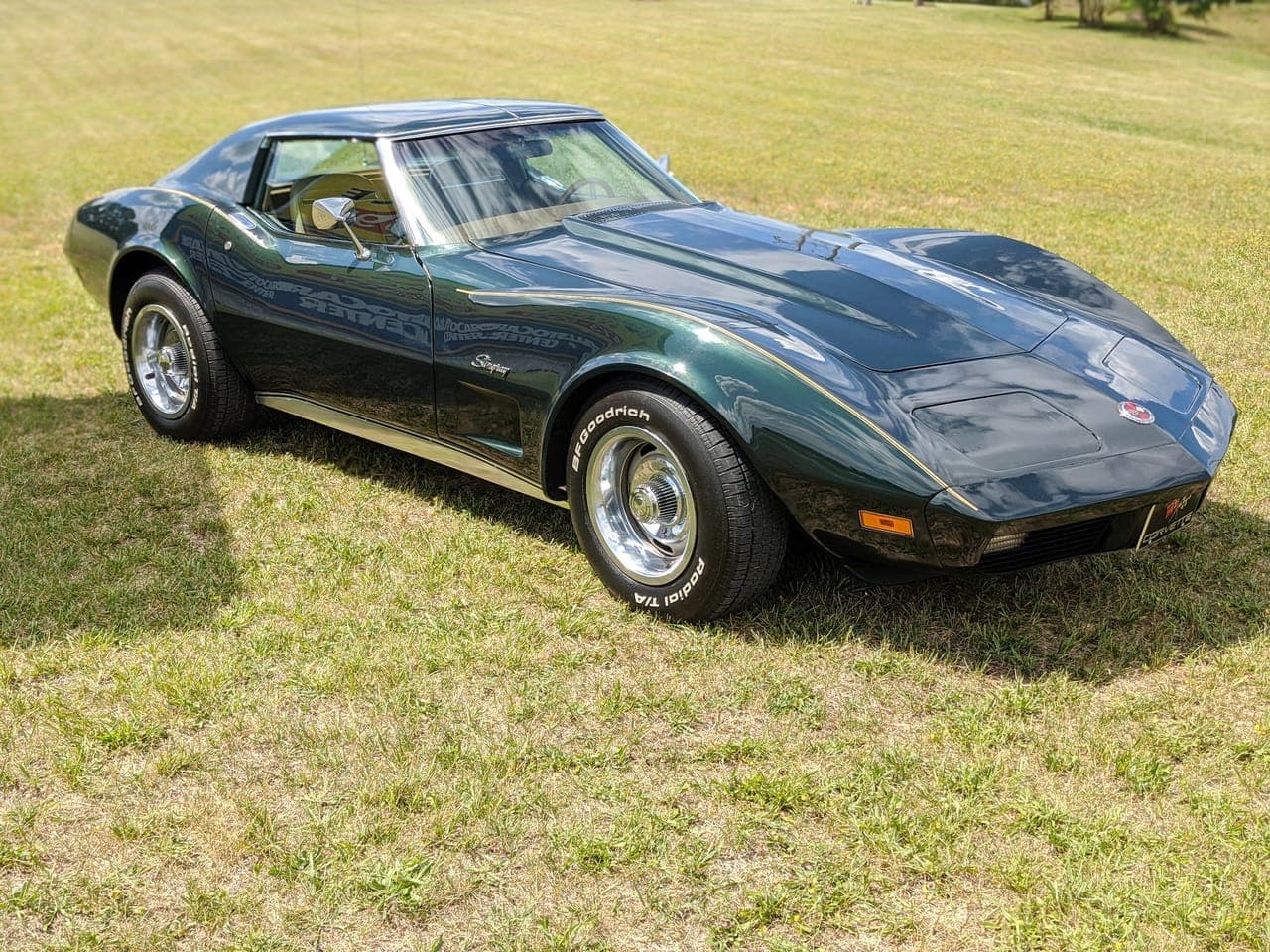
I never planned to rebuild my 1974 Corvette's engine. That decision got made for me on a drive to Geneva, New York, when the original small-block wiped two cam lobes and left me on the side of the road.
The rescue came the way it always does — my brother Justin dropped what he was doing and came to get me. If you have a sibling like that, you know what it's worth. But once the car was home and the engine was clearly done, I had a real choice to make about what went back in.
I love old cars. What I don't love is being stranded hundreds of miles from home, or babysitting carburetors and distributors every time the weather turns.
The rescue came the way it always does — my brother Justin dropped what he was doing and came to get me. If you have a sibling like that, you know what it's worth. But once the car was home and the engine was clearly done, I had a real choice to make about what went back in.
I love old cars. What I don't love is being stranded hundreds of miles from home, or babysitting carburetors and distributors every time the weather turns.
Everybody said put an LS in it. I said no.
If you've spent any time around classic cars, you already know what I heard next. Put an LS in it. I heard it a thousand times, and every time my answer was the same: no.
Nothing against LS swaps — I'm very familiar with them, and they're a great way to make easy, reliable power. But this was a Corvette, and I couldn't bring myself to throw away the small-block Chevy. The car's original engine carried the RPO code L48. I wanted to keep that character and still get every modern advantage.
So I did something a little different. I kept the small-block and made it run like a modern fuel-injected engine. I've been calling it the L(s)48.
Nothing against LS swaps — I'm very familiar with them, and they're a great way to make easy, reliable power. But this was a Corvette, and I couldn't bring myself to throw away the small-block Chevy. The car's original engine carried the RPO code L48. I wanted to keep that character and still get every modern advantage.
So I did something a little different. I kept the small-block and made it run like a modern fuel-injected engine. I've been calling it the L(s)48.
What “L(s)48” actually means
Here's the trick: you can run an old small-block Chevy on a modern General Motors LS computer. The engine stays an SBC; the brains come from the LS world.
I didn’t use an off-the-shelf Holley EFI conversion kit. Instead I used as many factory GM LS and small-block parts as possible — so if something ever needs replacing, it can be allocated right off the shelf at a parts store. I wired it up with an LS-swap harness reworked to fit the small-block. For the controller I went with a Gen III “P59” ECU — the 24x-crank version — for simplicity and a proven track record. Where there used to be a carburetor and a points-style distributor, there are now injectors, sensors, and a computer managing fuel and spark.
That's the entire point of an EFI conversion. The car starts cold without pumping the pedal, restarts hot without flooding, adjusts itself for weather and altitude, and stops needing a tune-up every season.
I didn’t use an off-the-shelf Holley EFI conversion kit. Instead I used as many factory GM LS and small-block parts as possible — so if something ever needs replacing, it can be allocated right off the shelf at a parts store. I wired it up with an LS-swap harness reworked to fit the small-block. For the controller I went with a Gen III “P59” ECU — the 24x-crank version — for simplicity and a proven track record. Where there used to be a carburetor and a points-style distributor, there are now injectors, sensors, and a computer managing fuel and spark.
That's the entire point of an EFI conversion. The car starts cold without pumping the pedal, restarts hot without flooding, adjusts itself for weather and altitude, and stops needing a tune-up every season.
Built to be driven, not raced
This was never going to be a race car, and I didn't want to rattle it to death with a giant camshaft. I leaned on Russell Hammaker and Gary Hammaker to steer the build and assemble a reliable small-block — what they jokingly called a “towing” engine. I had two requests: a hydraulic-roller-lifter setup and aluminum heads.
The short block got a new steel crank, new rods, and forged pistons. We set a pair of aluminum Liberty heads on top and chose a mild Comp cam — 218/224 degrees of duration at .050 inch, with .495 and .502 inches of lift. That's plenty for a street car that has to behave in traffic and on the highway.
One detail I'm glad I didn't skip: the bare block went to Powder House of Daytona to be powder coated before assembly. It came out exactly as good as their work always does.
The short block got a new steel crank, new rods, and forged pistons. We set a pair of aluminum Liberty heads on top and chose a mild Comp cam — 218/224 degrees of duration at .050 inch, with .495 and .502 inches of lift. That's plenty for a street car that has to behave in traffic and on the highway.
One detail I'm glad I didn't skip: the bare block went to Powder House of Daytona to be powder coated before assembly. It came out exactly as good as their work always does.
What an old small-block made on the dyno
From the factory, the 1974 L48 rolled out with a severely emissions-choked 195 horsepower at the crank — low compression, smog-era tuning, the whole story. We strapped the finished car to a Mustang chassis dyno to set the tune and see what the rebuild actually did.
It made a nice, square 350 horsepower and 350 lb-ft of torque — measured at the rear wheels, not the crank. For an old small-block built around reliability and street manners instead of peak power, that's a number I'll take every day of the week. And it makes that power as a modern fuel-injected engine: predictable, drivable, and happy to start on a cold morning. John Kerr dialed in the tune to get it there.
It made a nice, square 350 horsepower and 350 lb-ft of torque — measured at the rear wheels, not the crank. For an old small-block built around reliability and street manners instead of peak power, that's a number I'll take every day of the week. And it makes that power as a modern fuel-injected engine: predictable, drivable, and happy to start on a cold morning. John Kerr dialed in the tune to get it there.
It took a team
A project like this is never one person. This car is a reflection of the people we work with in our field, and I'm proud of everyone who touched it.
Thank you to Dan Rider for seeing it through from start to finish; to Gary and Russell Hammaker for a well-built engine; to Brendan Dougherty for the late nights getting it dyno-ready; to my brother Justin Large for the rescue missions and everything along the way; to Lindsey Rudegeair at Powder House of Daytona for the powder coating; to John Kerr for the tune; and to my dad, whose years of pipefitting are the reason the exhaust looks as good as it does. Anyone I didn't name here — thank you, too.
Thank you to Dan Rider for seeing it through from start to finish; to Gary and Russell Hammaker for a well-built engine; to Brendan Dougherty for the late nights getting it dyno-ready; to my brother Justin Large for the rescue missions and everything along the way; to Lindsey Rudegeair at Powder House of Daytona for the powder coating; to John Kerr for the tune; and to my dad, whose years of pipefitting are the reason the exhaust looks as good as it does. Anyone I didn't name here — thank you, too.
The same approach goes into your car
This Corvette is a true statement of new versus old, and proof that you don't have to build something the way everyone else does. That's the same thinking we bring to the shop every day.
Classic cars and EFI conversions are a genuine passion of mine — not a side project we tolerate. If you've got a carbureted classic that strands you, a fuel-injection swap you've been thinking about, or a tired engine that deserves a proper rebuild, that's exactly the kind of work we love. And if you just need honest service on a daily driver, the same hands that built the L(s)48 are the ones turning the wrenches.
Here's to many enjoyable years of issue-free classic-car ownership.
Classic cars and EFI conversions are a genuine passion of mine — not a side project we tolerate. If you've got a carbureted classic that strands you, a fuel-injection swap you've been thinking about, or a tired engine that deserves a proper rebuild, that's exactly the kind of work we love. And if you just need honest service on a daily driver, the same hands that built the L(s)48 are the ones turning the wrenches.
Here's to many enjoyable years of issue-free classic-car ownership.
The build, start to finish
Frequently Asked Questions
Can you put modern fuel injection on a carbureted classic car?
Yes. We converted a 1974 Corvette from a carburetor to electronic fuel injection using a GM LS computer and factory GM EFI parts — not an off-the-shelf conversion kit. EFI delivers reliable cold starts, hot restarts, and self-adjusting tuning for weather and altitude — without constant carburetor and distributor fiddling. Most popular V8s have a workable conversion path.
Do you have to do an LS swap to get EFI in a classic?
No. We kept the original-style small-block Chevy and ran it on a GM Gen III “P59” LS computer with an LS-swap harness reworked to fit — we nicknamed it the “L(s)48.” You keep the engine's character and still get modern, computer-managed fuel and spark. An LS swap is one option, not the only one.
How much power did the rebuilt 1974 Corvette make?
On a Mustang chassis dyno it made a square 350 horsepower and 350 lb-ft of torque at the rear wheels. For reference, the factory 1974 L48 was rated at just 195 horsepower at the crank in emissions-choked form. The build prioritized street reliability, using a mild hydraulic-roller cam and aluminum heads.
Does converting to EFI ruin the classic feel of the car?
Not in our experience. The engine stays a small-block Chevy, the exhaust note is unchanged, and the interior and looks are untouched. What changes is the frustration: no hot-start flooding, no cold-start ritual, and no seasonal carburetor tuning. You keep the character and lose the headaches.
Will you rebuild or upgrade the engine in my classic or hot rod?
Yes — engine rebuilds and carb-to-EFI conversions are some of our favorite work. We're in Grantville, PA, about 10 minutes from Hershey off I-81 Exit 80. Call (717) 473-5997 to talk through your project, whether it's a full rebuild, an EFI swap, or sorting out an existing setup.
The 1955 Fairlane I built for our weddingMeet Brandon, our founderAuto repair in Hershey, PABook a service appointment
Got a carbureted classic, an EFI swap in mind, or an engine that needs a proper rebuild? Call our Grantville shop at (717) 473-5997 or book an appointment online — classic-car work is what we love.
classic carsefi swapcorvetteengine rebuild1974 corvette