


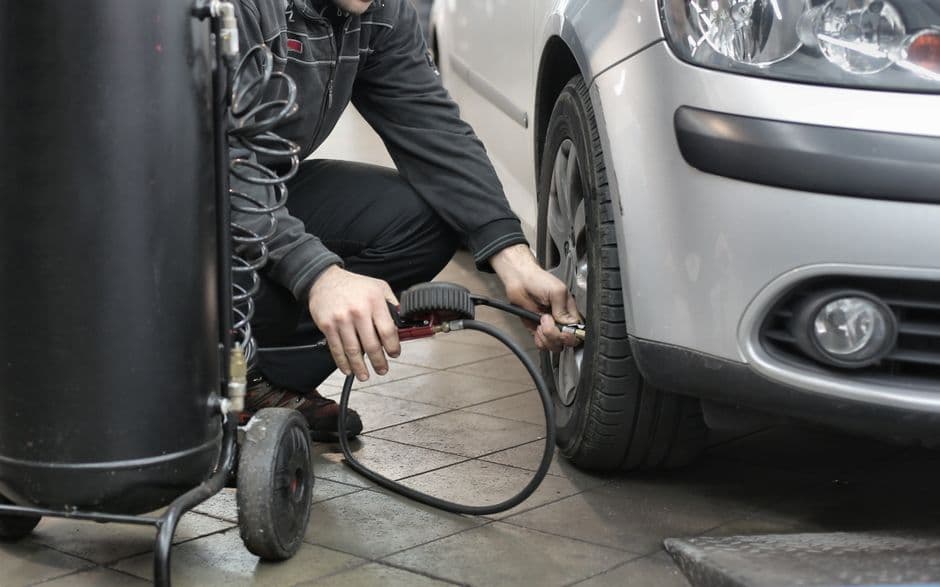
What should I do if my tire pressure light comes on?
If your tire pressure light or TPMS light comes on while you’re driving around Grantville, Hershey, Harrisburg, Lebanon, I-81, I-78, or the PA Turnpike, treat it as a signal to check the tires soon—not as something to ignore.
Here’s the practical first step:
If you are on a highway shoulder or anywhere traffic makes it risky to get out, stay focused on personal safety. Move away from traffic if you can do so safely and call roadside assistance or emergency services instead of trying to handle the tire in a dangerous spot.
Here’s the practical first step:
- Ease off your speed.
- Notice whether the vehicle pulls, shakes, or feels loose.
- Find a safe place away from traffic before getting out to look.
- Check for an obviously low tire, visible damage, a bulge, or anything stuck in the tread.
- If the vehicle feels unsafe, do not continue driving.
If you are on a highway shoulder or anywhere traffic makes it risky to get out, stay focused on personal safety. Move away from traffic if you can do so safely and call roadside assistance or emergency services instead of trying to handle the tire in a dangerous spot.
What the TPMS light may mean
The TPMS light is tied to your vehicle’s tire pressure monitoring system. It can come on for a few different reasons, and the light alone does not prove which one it is.
Possible causes include:
The right tire pressure depends on your vehicle, tire size, load, and driving conditions. Use the pressure listed on the vehicle placard or in the owner’s manual, not the highest pressure marking on the tire sidewall.
Possible causes include:
- Low tire pressure.
- A tire slowly losing air.
- A puncture or other tire damage.
- Seasonal pressure change during Central PA temperature swings.
- Uneven tire wear connected to alignment or suspension concerns.
- A TPMS sensor or system issue.
The right tire pressure depends on your vehicle, tire size, load, and driving conditions. Use the pressure listed on the vehicle placard or in the owner’s manual, not the highest pressure marking on the tire sidewall.
Why cold mornings around Grantville can trigger the light
Central PA weather can swing quickly, especially from warm afternoons to cold mornings. Those seasonal temperature changes can affect tire pressure, so a TPMS light may show up when the weather shifts.
That does not mean you should dismiss it. A cold-weather pressure change and a slow leak can look similar from the driver’s seat. A tire pressure check helps sort out whether the tire simply needs adjustment or whether there is a leak, damage, or another concern that should be inspected.
That does not mean you should dismiss it. A cold-weather pressure change and a slow leak can look similar from the driver’s seat. A tire pressure check helps sort out whether the tire simply needs adjustment or whether there is a leak, damage, or another concern that should be inspected.
When to stop driving and get help
Stop when it is safe and get help right away if you notice any of these signs:
For tire damage and other safety-related vehicle issues, a professional inspection is the right move. Driving farther on a damaged or underinflated tire can turn a small tire issue into a wheel, alignment, or suspension problem.
- A tire looks flat or very low.
- The vehicle shakes or vibrates badly.
- The vehicle pulls hard to one side.
- You see sidewall damage, severe tread damage, visible cords, or a bulge.
- The tire is losing air quickly.
- The issue happens on a highway shoulder or another unsafe roadside location.
For tire damage and other safety-related vehicle issues, a professional inspection is the right move. Driving farther on a damaged or underinflated tire can turn a small tire issue into a wheel, alignment, or suspension problem.
Why a professional tire pressure check is worth it
A proper tire pressure check is more than just adding air. At the counter, the goal is to separate a simple pressure adjustment from something that needs repair or further testing.
At NextGen AutoWorks in Grantville, tire sales, installation, rotation, balancing, and repair are offered. TPMS service is also offered, along with Hunter Road Force Elite balancing, wheel alignment, and steering and suspension services using Hunter alignment equipment.
A tire inspection may help identify:
Not every tire problem is repairable, and the correct answer depends on what the inspection shows.
At NextGen AutoWorks in Grantville, tire sales, installation, rotation, balancing, and repair are offered. TPMS service is also offered, along with Hunter Road Force Elite balancing, wheel alignment, and steering and suspension services using Hunter alignment equipment.
A tire inspection may help identify:
- A nail or other puncture.
- Uneven tire wear.
- A wheel balance concern.
- Alignment-related wear.
- Pothole-related tire or wheel damage.
- A TPMS issue.
Not every tire problem is repairable, and the correct answer depends on what the inspection shows.
Does a tire pressure light matter for PA inspection?
Tires are one of the common local inspection-related concerns in Pennsylvania, along with brakes, lights, wipers, exhaust, and suspension. Pennsylvania inspection outcome can only be determined by an actual inspection at an official inspection station.
NextGen AutoWorks offers PA state inspections and emissions inspections and is a certified Pennsylvania State Inspection station. If you have tire wear, damage, or a warning light concern before inspection time, it is better to have it checked before it becomes a bigger issue.
NextGen AutoWorks offers PA state inspections and emissions inspections and is a certified Pennsylvania State Inspection station. If you have tire wear, damage, or a warning light concern before inspection time, it is better to have it checked before it becomes a bigger issue.
Where to get a tire pressure check in Grantville, PA
If you’re searching for help with a tire pressure light in Grantville, PA, NextGen AutoWorks is located at 130 N Faith Rd, Grantville, PA 17028 and serves nearby Central Pennsylvania communities.
You can use the shop’s tire services page to learn more about tire repair, rotation, balancing, and TPMS service, search for tires if replacement is needed, or schedule service online.
Relevant pages:
You can use the shop’s tire services page to learn more about tire repair, rotation, balancing, and TPMS service, search for tires if replacement is needed, or schedule service online.
Relevant pages:
Frequently Asked Questions
Can I keep driving with the TPMS light on?
It depends on how the vehicle feels and what the tires look like. If a tire looks flat, the vehicle pulls, shakes, or feels unsafe, do not continue driving. Find a safe place and call for help or schedule an inspection with NextGen AutoWorks.
Should I add air when the tire pressure light comes on?
Only add air based on the pressure listed on your vehicle placard or owner’s manual. Do not use the highest number molded into the tire sidewall as your target pressure. If the light stays on or comes back, NextGen AutoWorks can check for leaks, damage, or TPMS issues.
Why did my tire pressure light come on after a cold night?
Seasonal temperature swings around Grantville and Central PA can change tire pressure, especially on colder mornings. A tire pressure check can help tell whether it is a normal pressure adjustment or a leak or tire damage that needs attention.
What if the TPMS light blinks?
A blinking TPMS light can point to a system-related concern rather than simple low tire pressure. NextGen AutoWorks offers TPMS service and can inspect the tire pressure monitoring system instead of guessing from the light alone.
Can NextGen AutoWorks repair my tire?
NextGen AutoWorks offers tire repair, tire sales, installation, rotation, balancing, and TPMS service. Whether a tire can be repaired depends on the damage, location, condition of the tire, and inspection results.
If your tire pressure light is on in Grantville or nearby Central PA, call NextGen AutoWorks at (717) 473-5997 to schedule a tire pressure check, TPMS service, or tire inspection.
TiresTPMSGrantville PAVehicle SafetyMaintenance